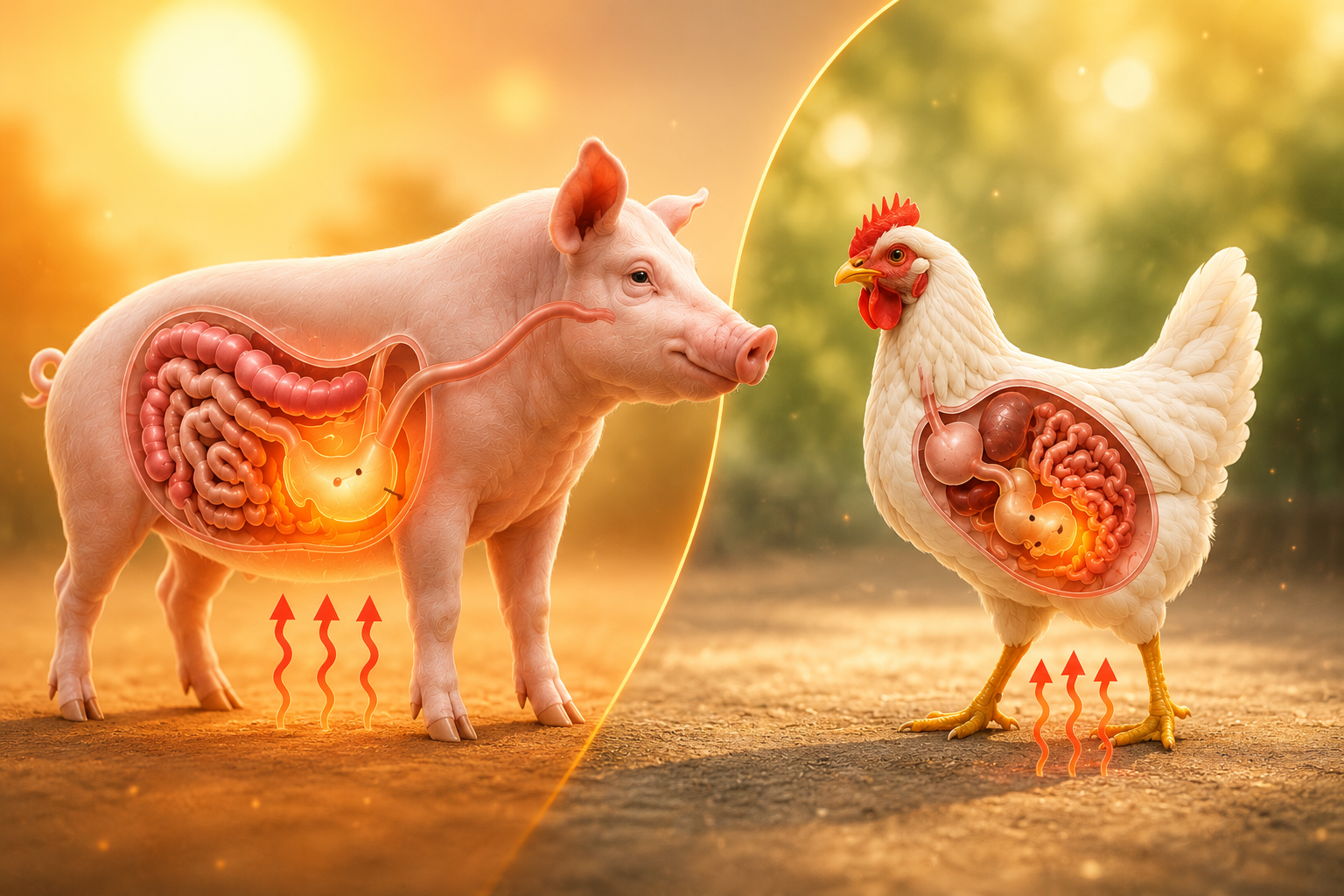


Fat typically represents only 3–8% of a complete pig or poultry diet. Yet, because fat contains more than twice the energy of carbohydrate or protein, it can contribute around 15% of dietary energy in young animals and 20–25% in energy-dense grower-finisher, layer and lactating diets.
It therefore needs a special attention to avoid any waste.
Most of this energy originates from triglycerides. They usually represent 80–95% of dietary lipids, while phospholipids generally account for only 2–8%. In standard maize–soy diets, the predominant fatty acids are long-chain C16 and C18 fatty acids: palmitic acid, stearic acid, oleic acid and linoleic acid. C8 and C10 are normally negligible unless coconut, palm-kernel products are used.
This fatty-acid profile matters. Long-chain fatty acids, particularly saturated palmitic and stearic acid, are powerful energy sources but are poorly soluble in water. The animal may receive enough dietary fat, yet still fail to capture its full energy value.
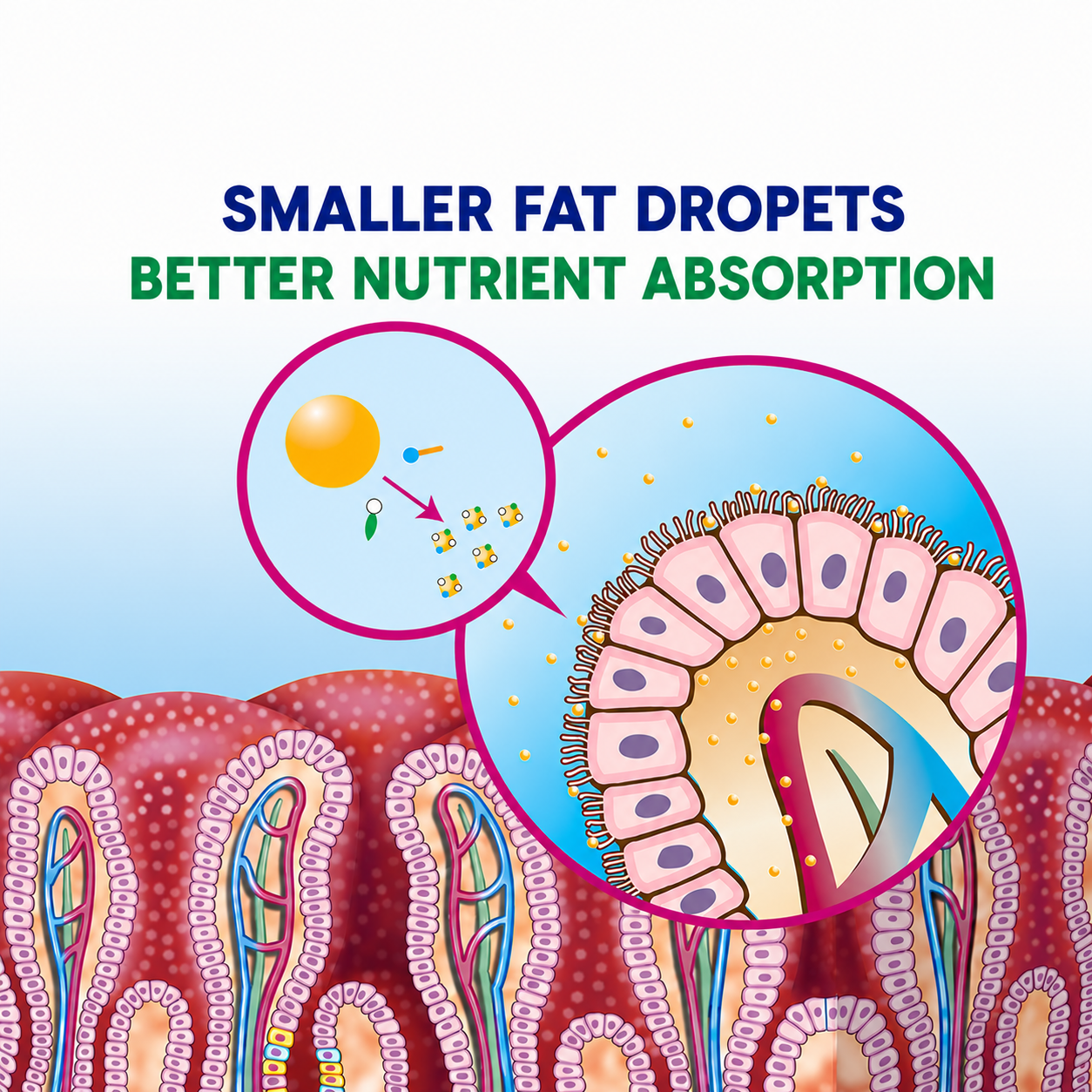
The first challenge is digestion. Pancreatic lipase breaks triglycerides mainly into free fatty acids and 2-monoglycerides. However, digestion is not absorption. These lipid products are hydrophobic. They cannot move through intestinal fluid as individual molecules at a sufficient rate, and they cannot cross the intestinal surface as fat droplets.
Before reaching the enterocyte, they must cross the aqueous boundary layer. This is not one anatomical wall, but a slowly mixed, hydrated zone formed by mucus, the unstirred water layer and the glycocalyx covering the microvilli. Mucus and glycocalyx protect the intestinal surface from chemical aggression and microbial contact, while the slow movement of water near the brush border creates a final diffusion barrier. This protection is essential, particularly in the duodenum, where recently acidified digesta arrives from the stomach.
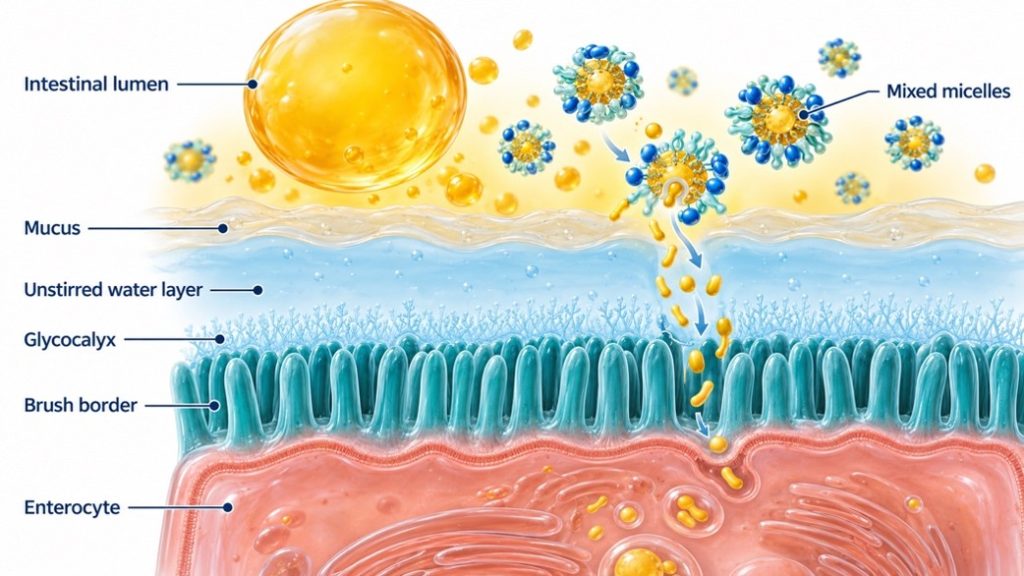
Water-soluble nutrients like amino-acids and glucose move through this environment relatively easily. Long-chain fatty acids and monoglycerides face a more difficult journey. They need a transporter.
Lysophospholipids are natural lipid transporters. Their one fatty-acid chain and polar phosphate head allow them to interact with both water and fat. They surround, disperse and transport hydrophobic lipid molecules through the aqueous boundary layer, helping them remain mobile until they reach the brush-border membrane.
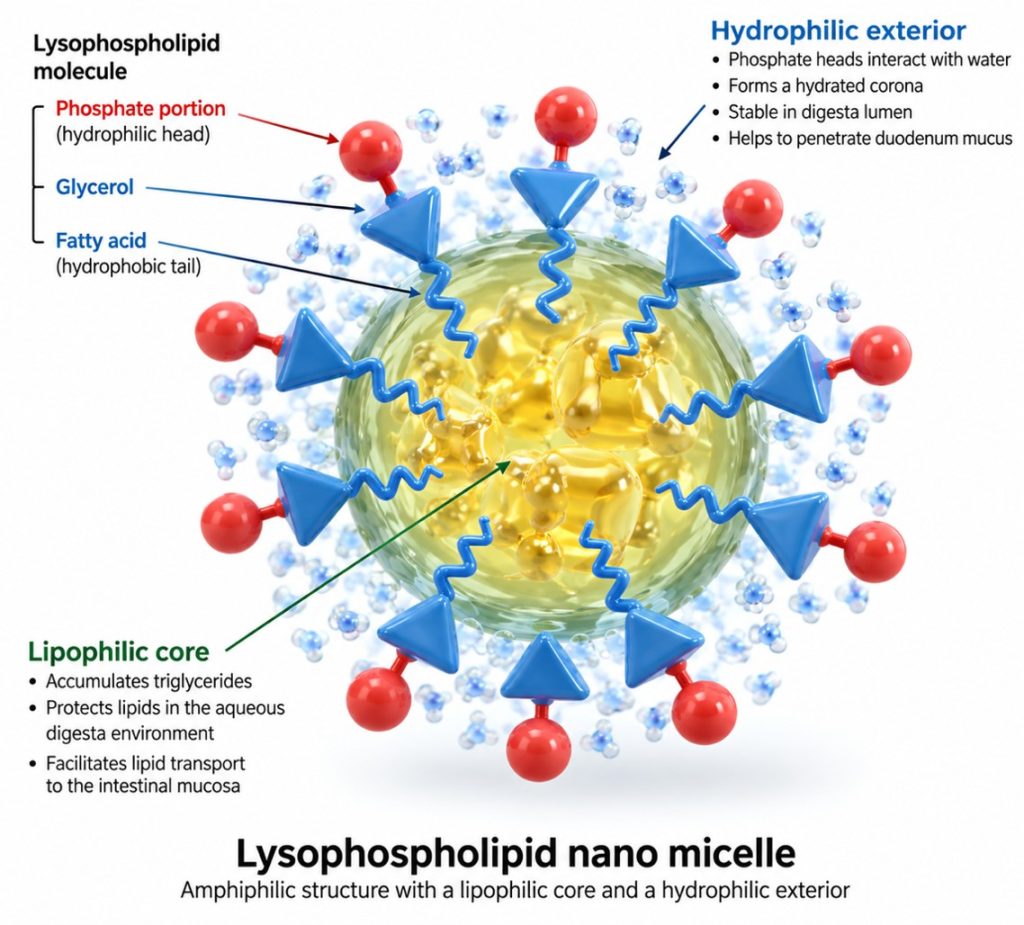
Without this natural transport system, long-chain fatty acids can aggregate, remain trapped in larger lipid structures or fail to reach the absorptive surface efficiently. With sufficient lysophospholipids, more lipid molecules can approach the enterocyte in an absorption-ready form.
At the brush border, fatty acids and monoglycerides leave their lysophospholipid transporter and enter the enterocyte by passive diffusion and assisted lipid-uptake mechanisms. Inside the cell, they are reassembled into triglycerides, packaged into chylomicrons and transported for energy use, tissue deposition, milk production or egg formation.
Lysophospholipids are an essential part of the animal’s natural fat-absorption system. Animals continuously produce them when pancreatic enzymes digest phospholipids originating from bile and the diet. This endogenous supply normally supports basic lipid transport. However, high feed intake, energy-dense diets and challenging fat sources can push this natural capacity towards its limit in high-producing animals. Nutritionists can therefore provide additional dietary lysophospholipids to reinforce lipid transport, help more long-chain fatty acids reach enterocytes and promote better use of dietary energy. Lipidflow does not replace the animal’s physiology; it strengthens the natural system that converts digested fat into animal performance.
Lysophospholipids do not supply energy by themselves but by as transporters, they are contributing to significantly increasing energy supply to enterocytes. They help the animal capture more of the energy already present in the diet. Their value is greatest when the natural lipid-transport system is challenged: in young animals with limited bile and lipase capacity, in high-energy grower and finisher diets, in lactating sows, in layers with high nutrient demand, and whenever saturated or variable-quality fat sources are used. In growing animals, improved capture of dietary energy can translate into 1-3% higher final body weight when lysophospholipids are added to diets, particularly when fat level is high or fat quality is challenging.