

THE HIGH COST OF ENERGY: MAXIMIZING EVERY KILOCALORIE
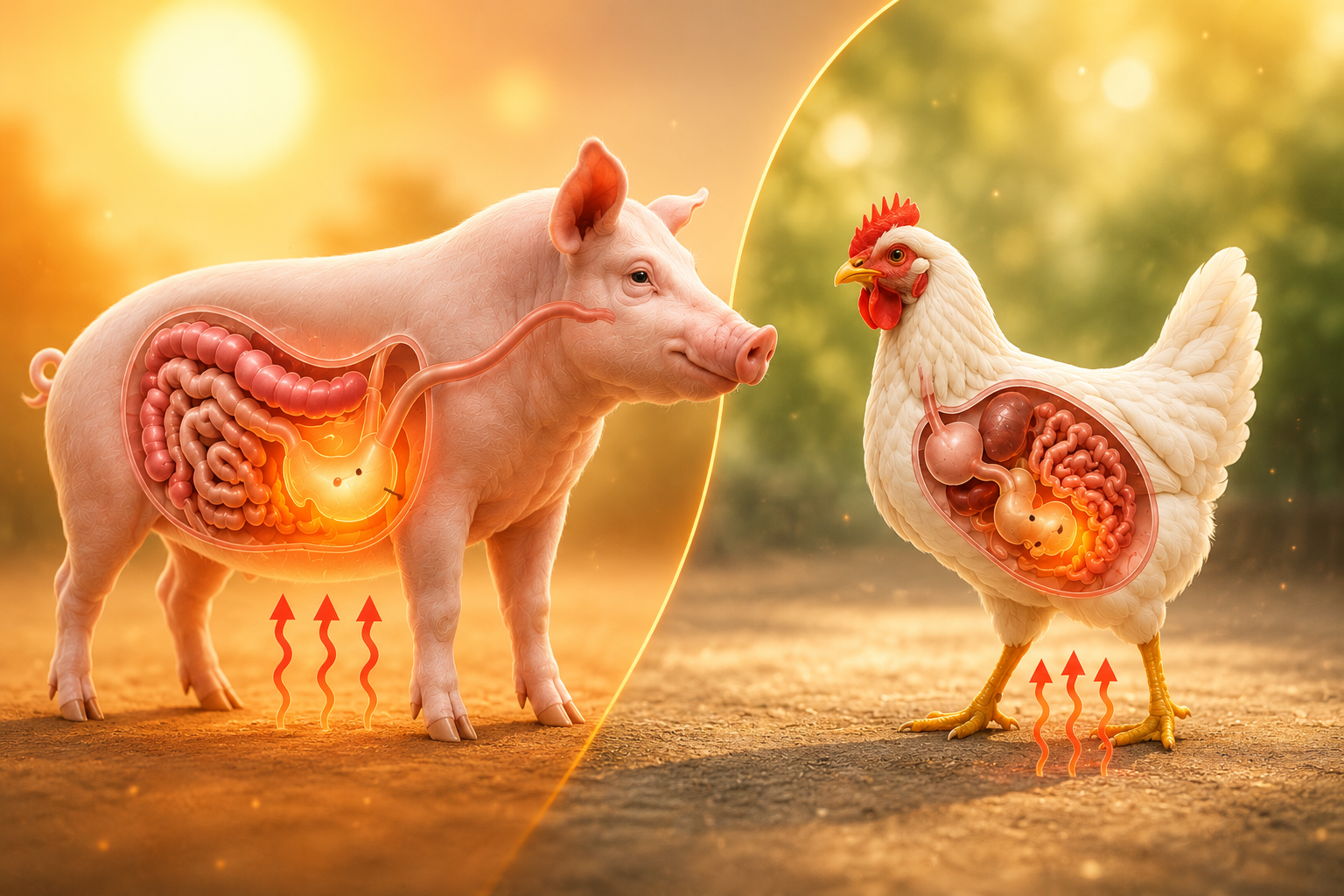
In modern swine and poultry formulation across Southeast Asia, energy remains the most expensive component of the ration. On a per-kilocalorie basis, lipids (fats and oils) are typically more than twice as expensive as carbohydrates. Despite this premium cost, omitting supplemental lipids is rarely viable. High-performance diets require lipids to concentrate dietary energy and maintain performance when volumetric intake is limited.
In standard commercial formulations, raw ingredients like corn, rice bran, and soy provide 2% to 3% of native lipids, while an additional 1% to 5% consists of supplemented fats. Chemically, these dietary lipids enter the gut under two distinct forms: 95% to 98% are present in the form of triglycerides, while only 2% to 5% exist as phospholipids. This means the vast majority of the total lipid load enters the digestive tract as heavy, non-polar molecules. Because lipids represent such a substantial financial investment across the entire ration, maximizing the biological utilization of both added and native fats is paramount.
Molecular geometry: from triglycerides to lysophospholipids
The architectural differences between triglycerides (TGs), standard phospholipids (PLs), and lysophospholipids (LPLs) dictate how they behave in an aqueous intestinal environment.
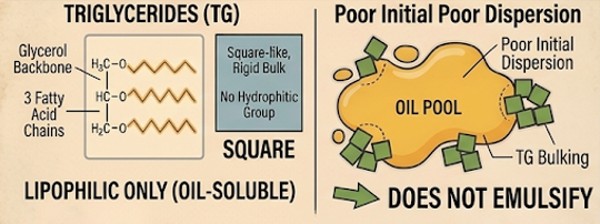
- Triglycerides (the square): Possessing three long fatty acid chains attached to a glycerol backbone, TGs are strictly lipophilic. Lacking hydrophilic properties, they naturally agglomerate into massive, unyielding oil pools.
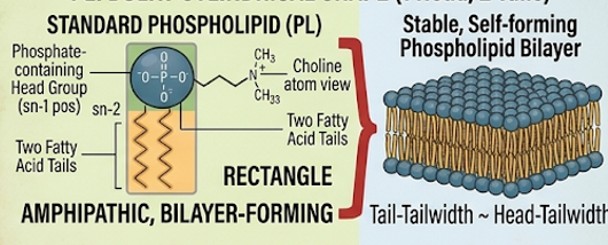
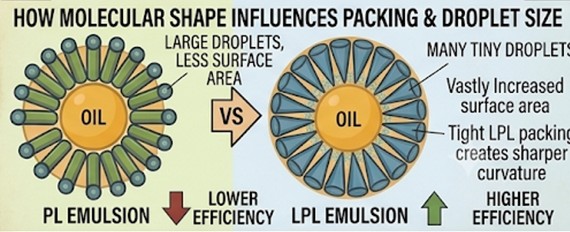
- Phospholipids (the rectangle): Found in crude lecithin, PLs form a rigid rectangle because the width of their two chains equals the head group. At an oil-water interface, they cannot achieve a sharp enough angular curvature to close tightly around small oil cores, resulting in large droplets with limited relative surface area.
- Lysophospholipids (the triangle): By enzymatically cleaving a single fatty acid chain—specifically at the sn-2 position—standard phospholipids are transformed into lysophospholipids. This alters the geometry into a perfect triangle (or conical wedge).
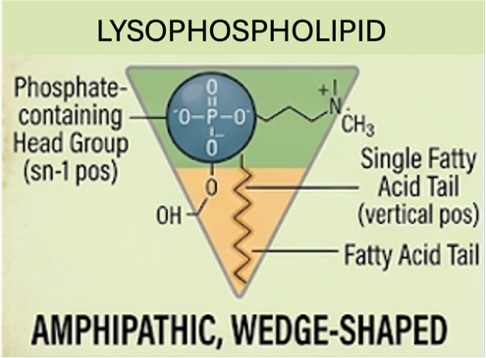
Like individual slices of a pizza fitting together to form a perfect circle, these triangular LPL molecules naturally align into a tight, highly curved radius, enabling the rapid, spontaneous creation of ultra-small emulsion droplets.
Intestinal physiology: overcoming fat quality variables
The digestive tract is an aqueous environment where water-soluble lipases can only operate at the exact oil-water interface. To maximize hydrolysis, we must exponentially increase surface area via micro-droplets. This interface becomes even more volatile depending on the fat sources used:
- Saturated vs. unsaturated ratio: Heavily saturated fats (like palm oil or tallow) have high melting points and form rigid crystalline structures in the gut. Without powerful amphiphilic assistance, their natural digestibility is significantly lower than highly unsaturated liquid oils.
- High free fatty acids (FFA): Byproducts like acid oils or low-quality restaurant greases contain high levels of unesterified fatty acids. These are much harder for endogenous bile to pack into micelles because they lack the texturizing monoglyceride backbone normally generated during triglyceride breakdown.
Conditioning vs. intestinal emulsification
Technical surfactants, such as ricinoleate-based products or polysorbates, are valued in feed mills to improve pellet quality during conditioning. However, their action stops post-ingestion. While ricinoleate-based products are often structurally altered by low gastric pH and heat, polysorbates face an even tougher bottleneck: they are actively deactivated by endogenous pancreatic lipase. Lipase breaks their ester bonds in the duodenum, stripping them of their surfactant properties.
In sharp contrast, lysophospholipids are completely resistant to pancreatic lipase. Lacking the sn-2 fatty acid chain, they survive the enzymatic environment of the duodenum intact, maintaining micro-droplet stability exactly where the animal needs it most.
The absorption phase: advanced intestinal transporters
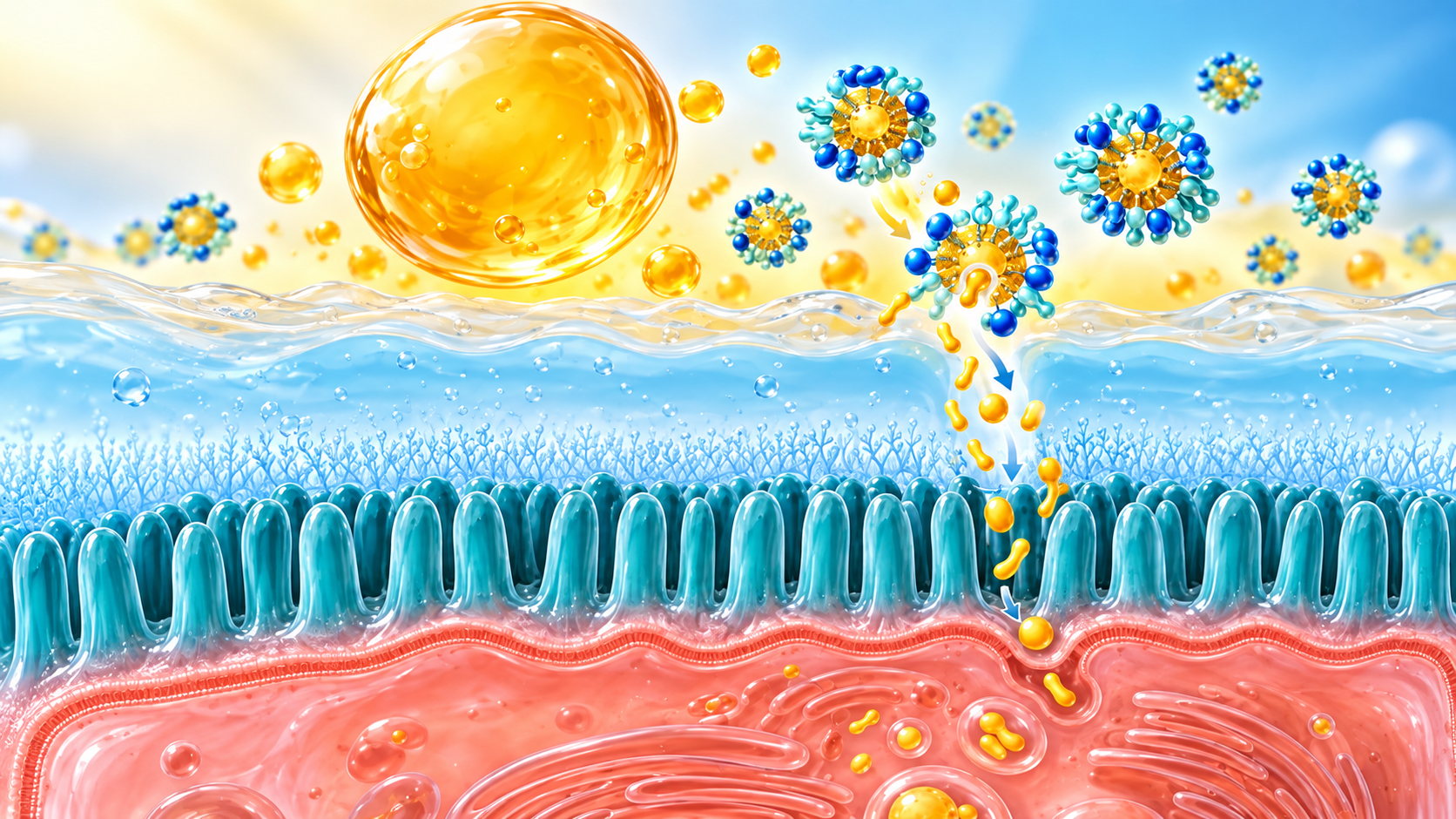
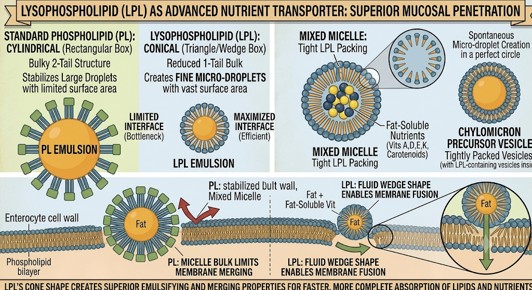
The superior value of lysophospholipids extends far beyond fat splitting; they play a vital role in mucosal penetration. Once lipids are digested, their components must cross the unstirred water layer to reach the intestinal wall.
Lysophospholipids act as highly dynamic intact transport vehicles. Because of their fluid wedge shape and chemical compatibility, LPLs readily integrate into the rigid phospholipid bilayer of the enterocyte microvilli membranes. By temporarily increasing the fluid dynamics and permeability of the microvilli membrane, LPLs facilitate the active transport of digested fatty acids alongside other expensive lipid-soluble nutrients—such as Vitamins A, D, E, and K.
Conclusion
Upgrading to a targeted nutritional emulsifier bridges the gap between formulation cost and biological execution. Ultimately, lysophospholipids represent the most effective solution to reduce droplet size, maximize surface contact with pancreatic lipase, and actively carry digested lipids through the enterocyte membranes. They are the most effective tool to increase the utilization of dietary lipids—reducing the cost of energy in diets where supplemental fat is added, as well as maximizing the absorption of fats naturally present in raw feed ingredients. Consequently, the feed cost savings generated by lysophospholipids are directly captured into the formulation matrix via the nutritional matrix values provided by suppliers.
David Serene