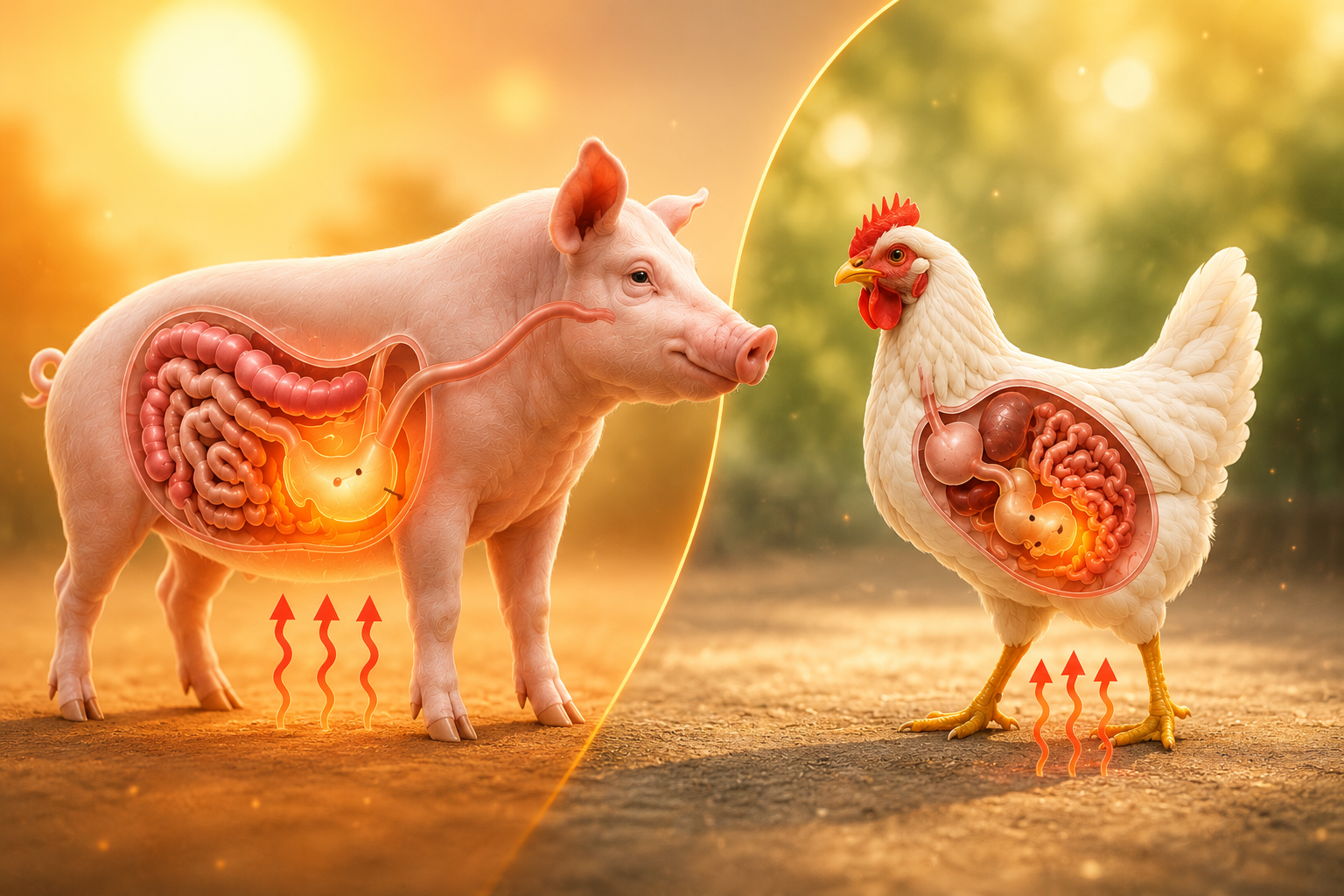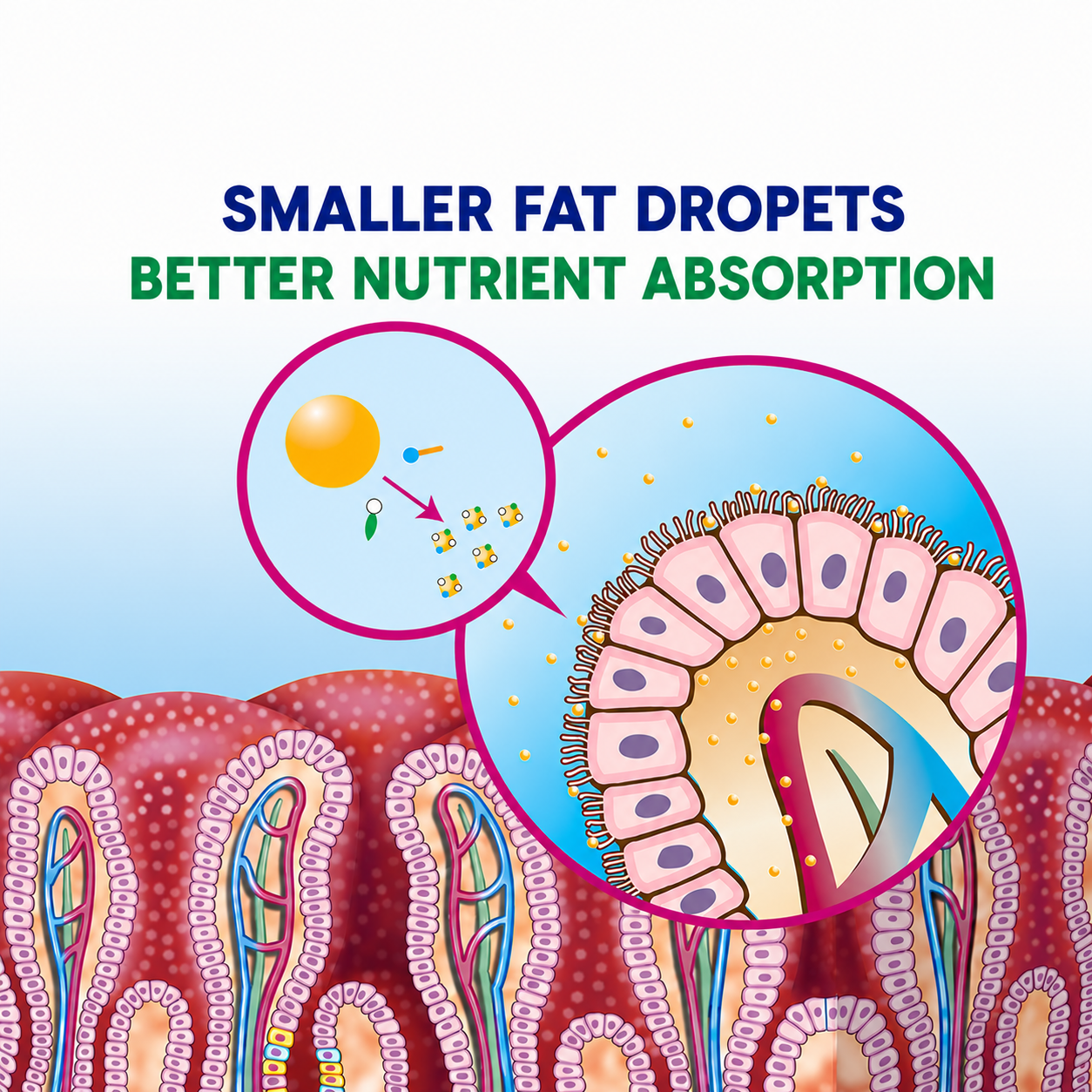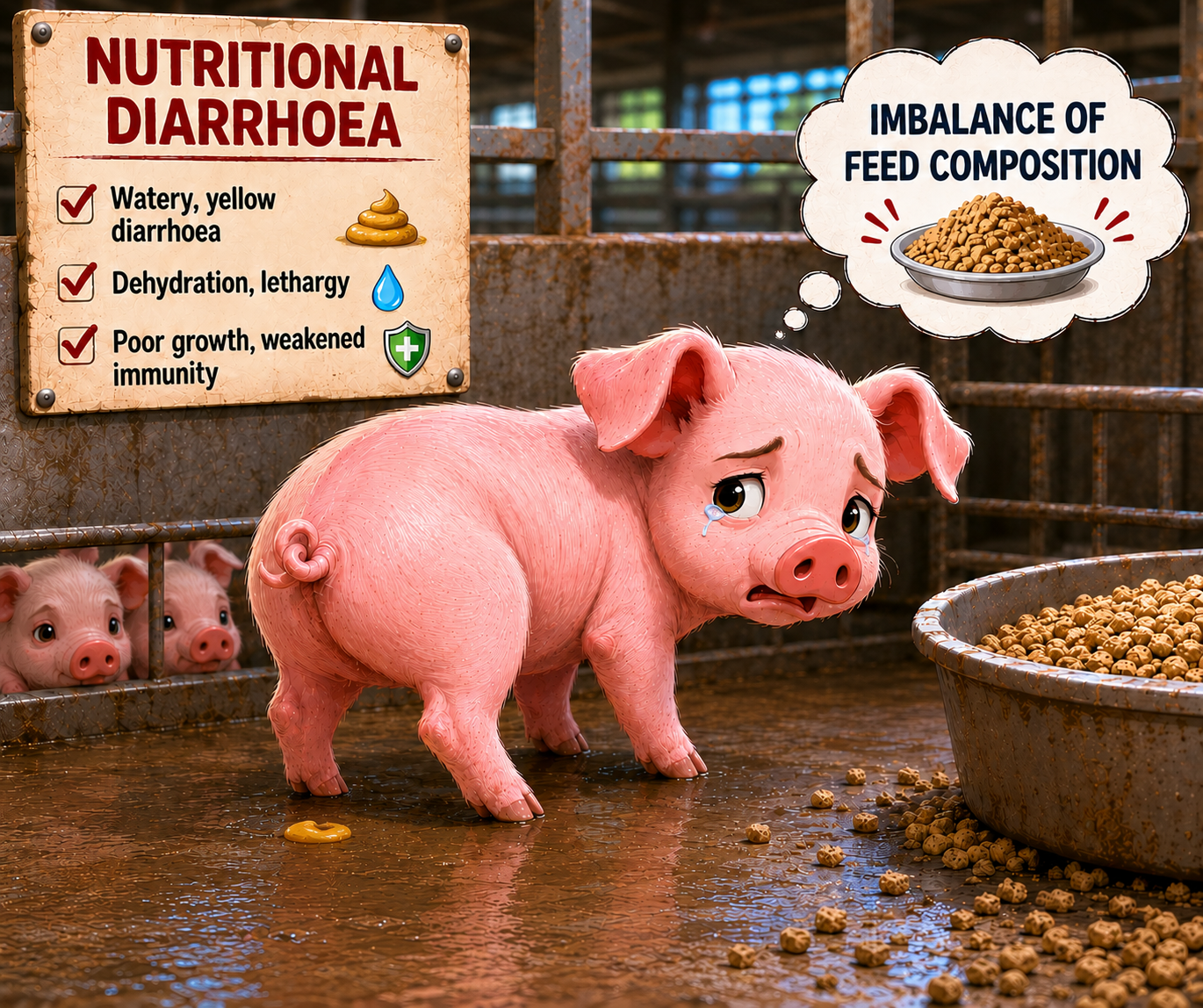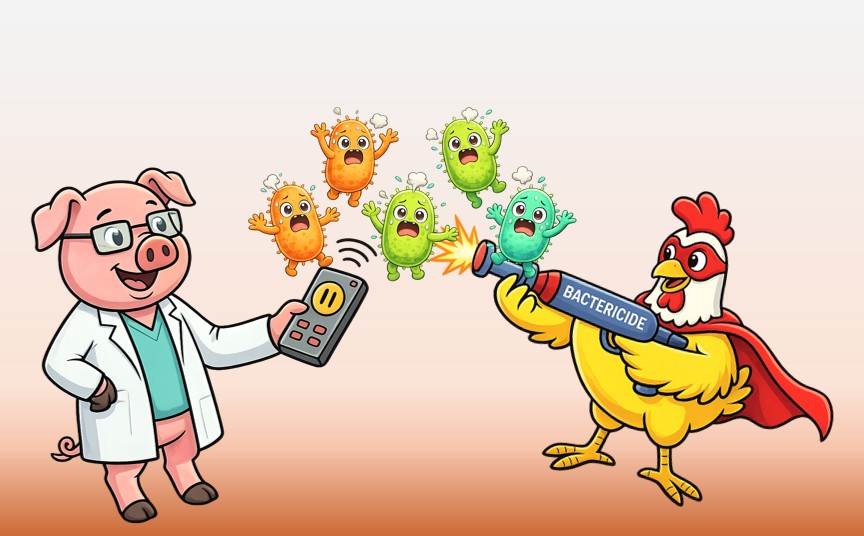


In modern swine, poultry, and aquaculture nutrition, microbial-based additives have become essential tools to improve animal health, performance, and resilience. For many years, probiotics have been widely used in animal feed. More recently, postbiotics have emerged as a complementary approach. Although probiotics and postbiotics both originate from microorganisms, they operate through very different mechanisms and therefore have different optimal applications.
A probiotic is defined as a live microorganism that, when administered in adequate amounts, confers a health benefit to the host. In animal nutrition today, most probiotics used in feed belong to the Bacillus family because these bacteria can form spores that allow them to better tolerate feed processing conditions. However, it is important to recognize that the Bacillus family contains thousands, possibly millions, of different strains, and only a very small proportion of them demonstrate measurable benefits for animal performance.
The positive effects described for probiotics in this article therefore apply only to strains that have been thoroughly selected, characterized, and validated through research and field trials. Not all Bacillus strains provide beneficial effects, and the efficacy of a probiotic depends strongly on the specific strain used.
A postbiotic, in contrast, does not contain living bacteria. It consists of microbial metabolites, cell-wall fragments, peptides, and other bioactive molecules generated during controlled fermentation. These compounds interact directly with the animal’s physiology without requiring bacterial survival or replication.
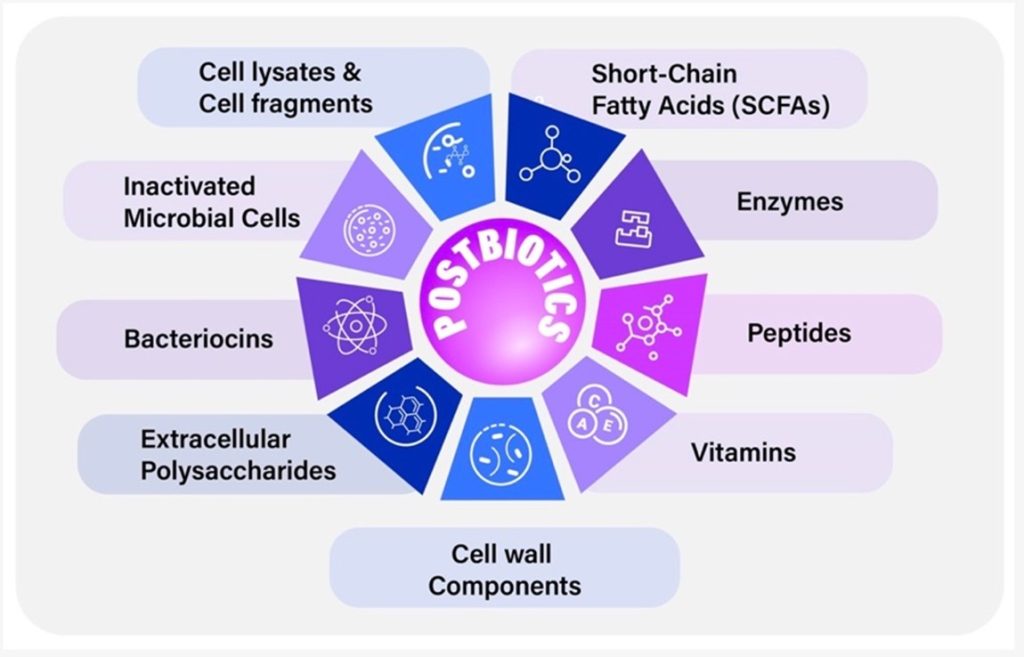
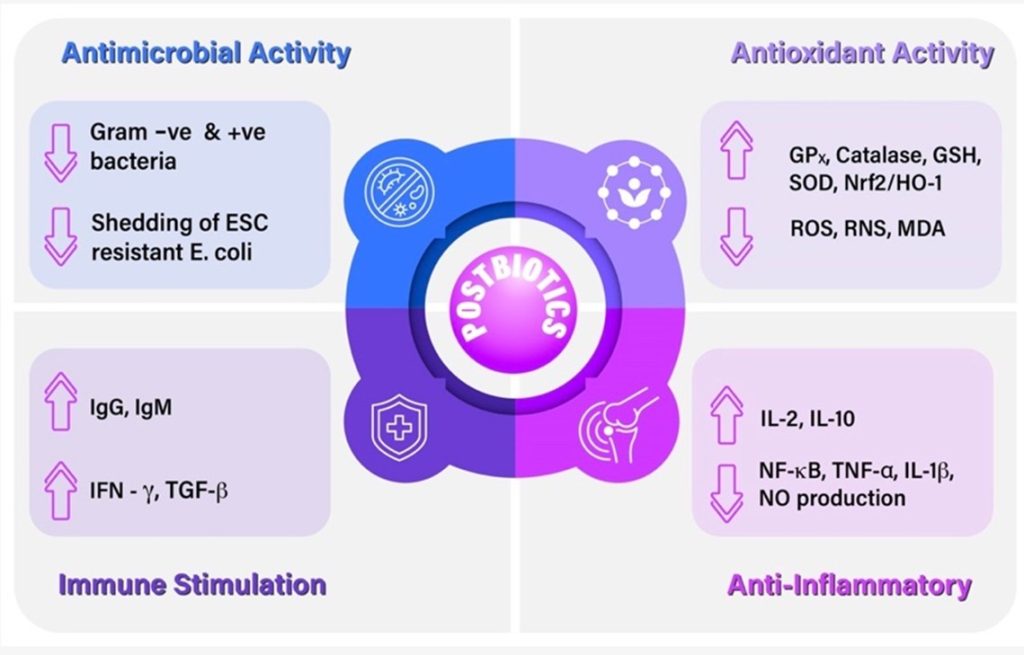
Understanding these differences helps nutritionists select the right tool depending on the production objective.
When Postbiotics Offer Clear Advantages
Postbiotics provide several benefits that probiotics cannot easily replicate because they do not rely on living microorganisms.
The first advantage is speed of action. Postbiotics already contain the functional molecules produced by microbes, such as peptides, organic acids, or immune-modulating compounds. Once ingested, these molecules interact immediately with the intestinal environment. Probiotics must first survive passage through the stomach, adapt to gut conditions, and start metabolic activity before producing similar compounds. In fast production systems such as broilers or newly weaned piglets, this delay can reduce their practical impact, especially when animals face disease.
The second benefit is thermal stability during feed processing. Because postbiotics contain no living organisms, they remain stable during pelleting and feed storage. Probiotics may lose viability when exposed to high pelleting temperatures. Although Bacillus strains can form spores and therefore tolerate heat better than many other bacteria, survival is not guaranteed unless the strain has been carefully selected and validated for high-temperature processing conditions.
The third advantage is guaranteed dosage of active compounds. Postbiotics deliver a defined concentration of metabolites and bioactive molecules. Manufacturers today have powerful analytical tools, including chromatography and metabolite profiling techniques, that allow them to confirm the presence and concentration of these key compounds in each production batch. With probiotics, by contrast, the amount of beneficial metabolites produced depends on bacterial growth and metabolic activity in the intestine, which can vary depending on diet composition, gut environment, and microbial competition.
A fourth benefit is independence from microbial competition. Probiotic bacteria must compete with the resident microbiota for nutrients and attachment sites. In many situations, particularly during disease challenges or after antibiotic treatment, their ability to establish themselves may be limited. Postbiotics bypass this ecological constraint because their biological activity does not depend on colonization.
Finally, postbiotics offer the possibility of targeted immune stimulation. Manufacturers can select specific microbial metabolites or cell fragments known to interact with immune receptors in the intestinal mucosa and stimulate innate immune responses. Probiotic strains, in contrast, are usually selected based on criteria such as survival during feed processing, resistance to gastric conditions, and the ability to colonize the gut. These requirements automatically exclude many potentially interesting bacteria that are not temperature-stable or cannot persist in the intestinal environment. As a result, the range of possible functional molecules that can be explored and developed is often broader when designing postbiotic products than when selecting probiotic strains.
When Probiotics Remain Superior
Despite these advantages, probiotics possess important strengths that postbiotics cannot replicate because they are living organisms.
The first benefit is the continuous production of beneficial metabolites. Once established in the gut, probiotic bacteria can continuously produce organic acids, antimicrobial compounds, and signaling metabolites. In this sense, they function as small metabolic factories inside the intestine. Postbiotics deliver a fixed amount of metabolites and cannot generate new compounds after ingestion.
The second advantage is the ability to reshape the intestinal microbiota. Through metabolic activity and ecological interactions, probiotics can influence the microbial community and help establish a more favorable balance of bacteria. Postbiotics cannot modify the structure of the microbiota in this way because they do not replicate.
Probiotics also contribute to competitive exclusion of pathogens. Certain strains occupy adhesion sites on the intestinal mucosa or compete for nutrients with harmful bacteria. This ecological competition can reduce the colonization of pathogens such as E. coli or Salmonella. Postbiotics cannot provide this physical microbial competition.
Another benefit is the production of digestive enzymes. Many probiotic strains produce enzymes that help break down feed components such as proteins or carbohydrates. These enzymatic contributions can support nutrient digestion over time. Postbiotics may contain metabolites but cannot generate new enzymatic activity in the gut.
Choosing the Right Tool
For swine, poultry, and aquaculture nutritionists in Vietnam and Thailand, probiotics and postbiotics should therefore be viewed as complementary solutions rather than competing technologies.
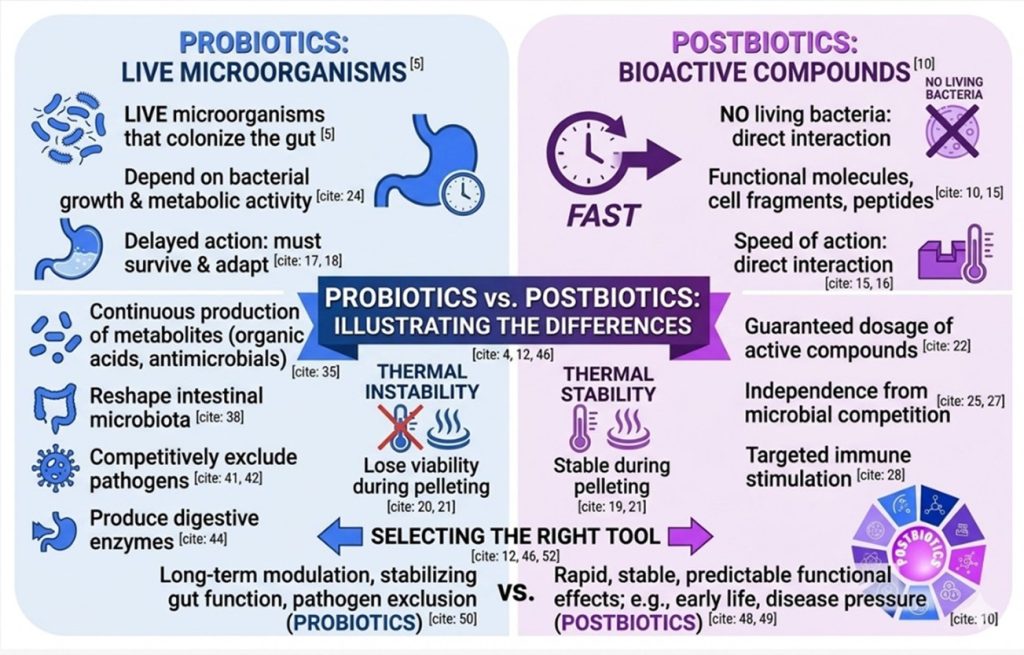
Postbiotics are particularly useful when rapid, stable, and predictable functional effects are required. They are often selected and developed with a specific physiological objective, most frequently the reinforcement of the animal’s immune response, especially during early life stages or periods of disease pressure.
Probiotics, on the other hand, are better suited for long-term modulation of the intestinal microbiota, where continuous microbial activity, pathogen exclusion, and enzymatic contributions can help stabilize gut function. Their success, however, depends strongly on the selection of the right strain, as only a limited number of Bacillus strains demonstrate consistent benefits in animal production.
By understanding the distinct mechanisms of these two approaches, feed nutritionists can select the most appropriate strategy to improve animal health, resilience, and production performance across swine, poultry, and aquaculture systems.
David Serene