

Post-weaning diarrhea remains one of the biggest challenges in swine production. In Southeast Asia, where the reduction of antibiotic growth promoters (AGP) has become a priority, the industry often explains diarrhea mainly through the proliferation of pathogenic E. coli. As a result, most anti-diarrhea strategies focus on suppressing bacterial populations with antibiotics, zinc oxide, acids, or phytobiotics.
However, this understanding is incomplete. In many cases, E. coli is not the primary cause of diarrhea, but rather the consequence of a digestive dysfunction. The real trigger is often nutritional diarrhea caused by poor protein digestion after weaning.
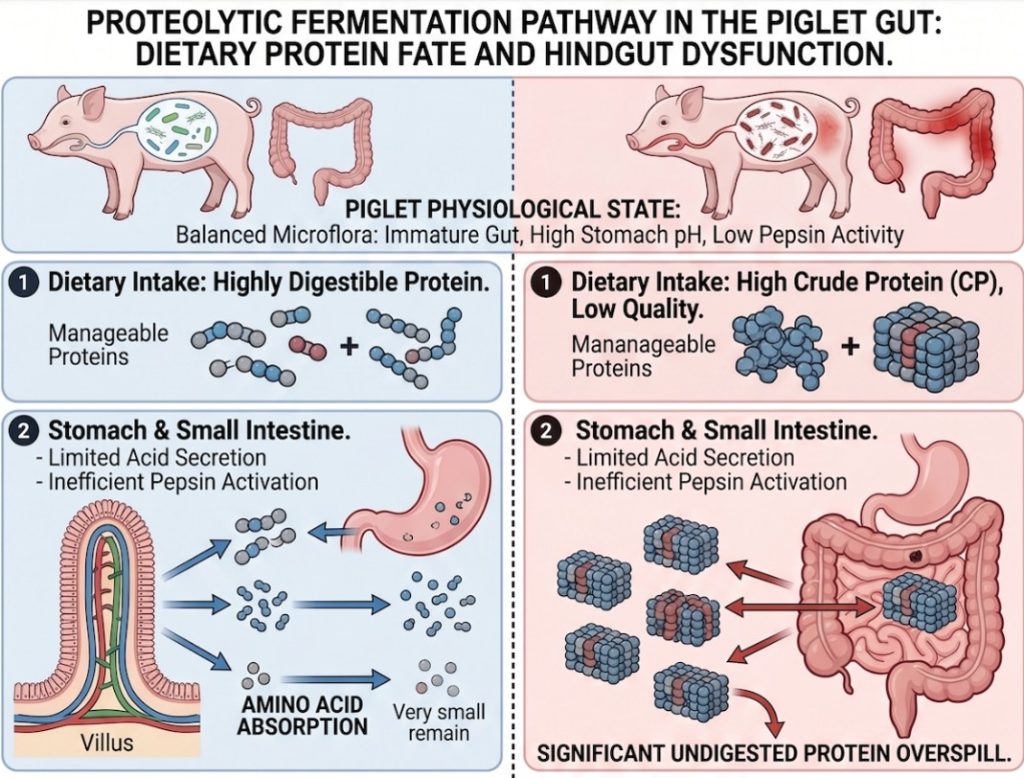
At weaning, piglets suddenly transition from highly digestible milk proteins to complex vegetable proteins. Their digestive system is still immature. Gastric acid secretion is limited, stomach pH remains too high, and pepsinogen cannot be efficiently converted into pepsin, the enzyme responsible for initiating protein digestion. Pancreatic enzyme secretion is also still insufficient.
As a consequence, a significant portion of dietary protein escapes digestion and absorption in the small intestine. These undigested proteins then reach the colon, where they become substrates for proteolytic bacteria such as E. coli and Clostridium.
This leads to the first major misunderstanding in the industry: diarrhea is not always initiated by pathogens. Very often, pathogens simply take advantage of an excess supply of undigested protein in the hindgut.
Proteolytic fermentation profoundly alters the intestinal environment. Instead of producing beneficial short-chain fatty acids from fiber fermentation, bacteria ferment amino acids and generate ammonia, biogenic amines, phenols, indoles, and branched-chain fatty acids. These metabolites irritate the intestinal mucosa, damage villi, increase inflammation, and reduce water absorption. The result is wet feces, poor nutrient digestibility, and diarrhea.
This phenomenon becomes even more problematic when AGP usage is reduced. Antibiotics previously helped suppress opportunistic proteolytic bacteria. Without them, every formulation mistake becomes more visible.
Most nutritionists already understand these mechanisms. The challenge today often comes from market pressure. Farmers still strongly associate high crude protein levels with feed quality and growth performance because they mainly evaluate feed labels rather than digestibility. To remain competitive, feed manufacturers are therefore pushed to formulate diets with elevated crude protein levels, sometimes at the expense of protein quality and digestibility.
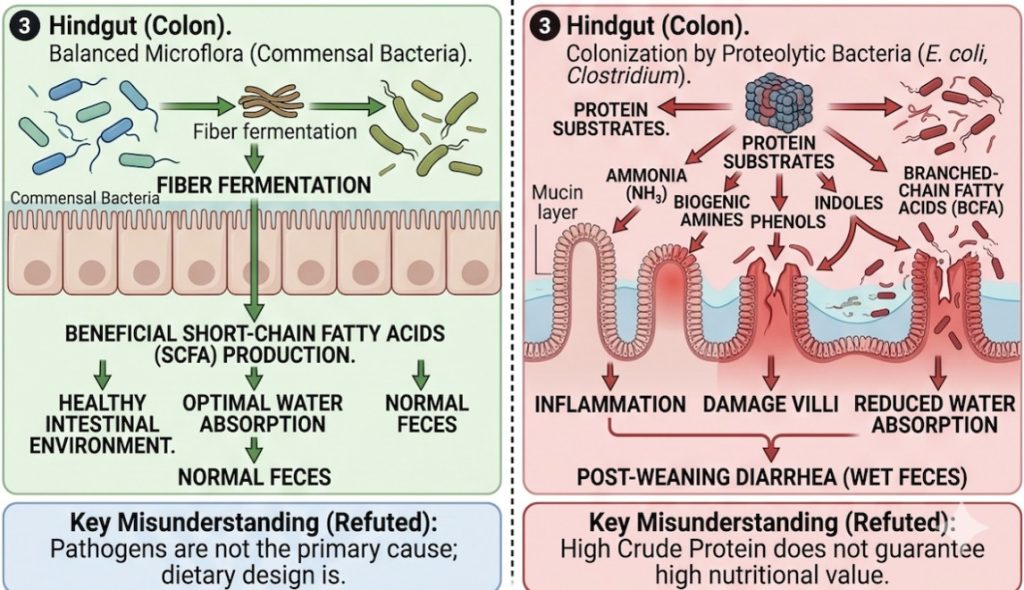
This creates the second major misunderstanding: high crude protein does not necessarily mean high nutritional value.
To maximize crude protein at the lowest cost, nutritionists are often forced to use lower digestible protein sources. Poorly processed soybean meal, overheated proteins, certain vegetable concentrates, meat meals, or low-quality by-products may increase crude protein on paper while significantly increasing the amount of undigested protein reaching the colon.
The animal does not benefit from protein it cannot digest. On the contrary, this undigested fraction becomes fuel for proteolytic bacteria and aggravates intestinal dysbiosis.
The priority today is therefore not to educate nutritionists, but to educate feed sales teams and farmers. The industry must progressively move from a crude protein mindset toward a digestibility mindset. In the future, “undigested protein” could even become a nutritional parameter displayed on feed bags alongside crude protein and digestible amino acids.
Feed formulation should no longer focus only on crude protein percentage. The real objective should be digestible amino acids and minimal undigested protein flow toward the colon.
A practical approach would be to define a maximum acceptable level of undigested protein in piglet diets and use it as a formulation constraint, exactly like energy or amino acid specifications. This would encourage the selection of highly digestible raw materials rather than simply maximizing crude protein.
At the same time, rigid minimum crude protein constraints should be reconsidered. With the development of synthetic amino acids, it is now possible to reduce crude protein while still perfectly covering amino acid requirements. Lower crude protein diets generally reduce proteolytic fermentation and improve gut health.
Protease enzymes can help compensate for the immature digestive system of piglets after weaning by improving the hydrolysis of dietary proteins in the stomach and small intestine. By reducing the quantity of undigested protein reaching the colon, proteases directly limit the substrate available for proteolytic bacteria and therefore help reduce nutritional diarrhea and stabilize gut flora.
Another key strategy is improving gastric digestion by lowering stomach pH. Young piglets naturally produce little hydrochloric acid, and modern diets often contain excessive buffering capacity due to ingredients such as calcium carbonate. When stomach pH remains too high, pepsin activation becomes insufficient and protein digestion deteriorates further.
For this reason, nutritionists should closely monitor feed ABC-4 values, which reflect the acid-binding capacity of the diet. Lower ABC-4 diets help acidify the stomach and improve protein digestion.
Several practical nutritional tools can help reduce dietary buffering capacity:
- Reduce pharmacological zinc oxide inclusion levels (https://www.nutrispices.com/nutrinews/nutricles/how-and-where-does-zinc-oxide-operate/ )
- Replace calcium carbonate partially or totally with calcium formate (https://www.nutrispices.com/nutrinews/nutricles/nutricle-how-to-acidify-without-acidifier/ )
- Increase the inclusion of organic acids such as formic, lactic, or citric acid
Beyond digestibility, maintaining a balanced gut microbiota is equally critical. The objective is not only to suppress proteolytic bacteria but also to promote beneficial fermentative bacteria capable of producing short-chain fatty acids such as acetate and butyrate.
Fibers play a major role in this balance. Insoluble fibers help regulate transit (https://www.nutrispices.com/nutrinews/nutricles/fibers-sand/ ), reduce bacterial adhesion, and mechanically stimulate the gut, while fermentable fibers support cellulolytic bacteria in the distal intestine. These bacteria produce acetate and butyrate, which nourish enterocytes, stimulate villi development (https://www.nutrispices.com/nutrinews/nutricles/science-scraping/ ), improve water reabsorption, and reinforce intestinal integrity.
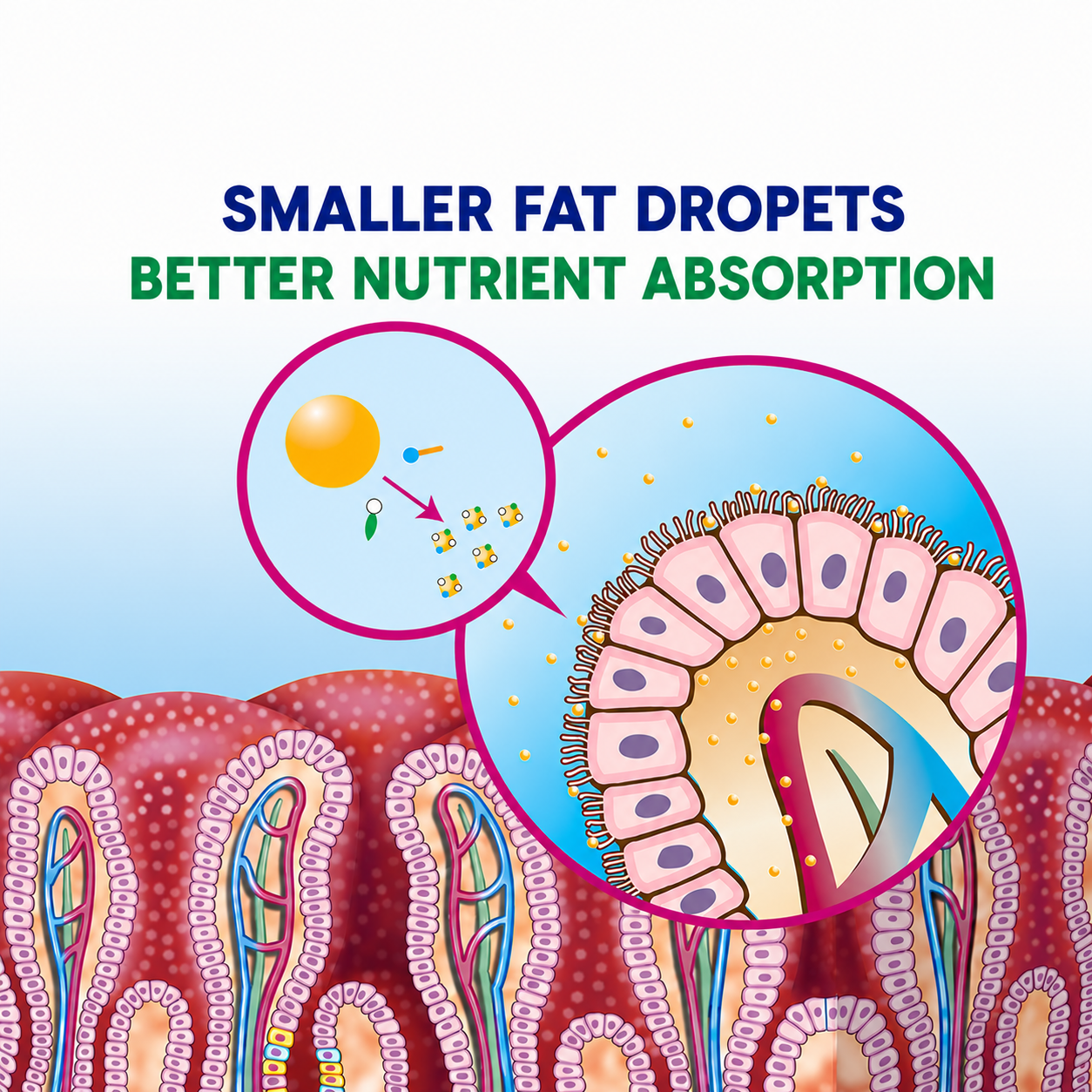
Tributyrin can further support this mechanism by directly supplying butyric acid to enterocytes. Butyrate is a preferred energy source for intestinal cells and contributes to villi recovery, tight junction integrity, and water absorption.
Probiotics also help stabilize the microbiota by competing with proteolytic bacteria, accelerating microbiota maturation, and favoring beneficial fermentative populations. In combination with optimized digestibility and fiber management, they contribute to restoring microbial balance after weaning.
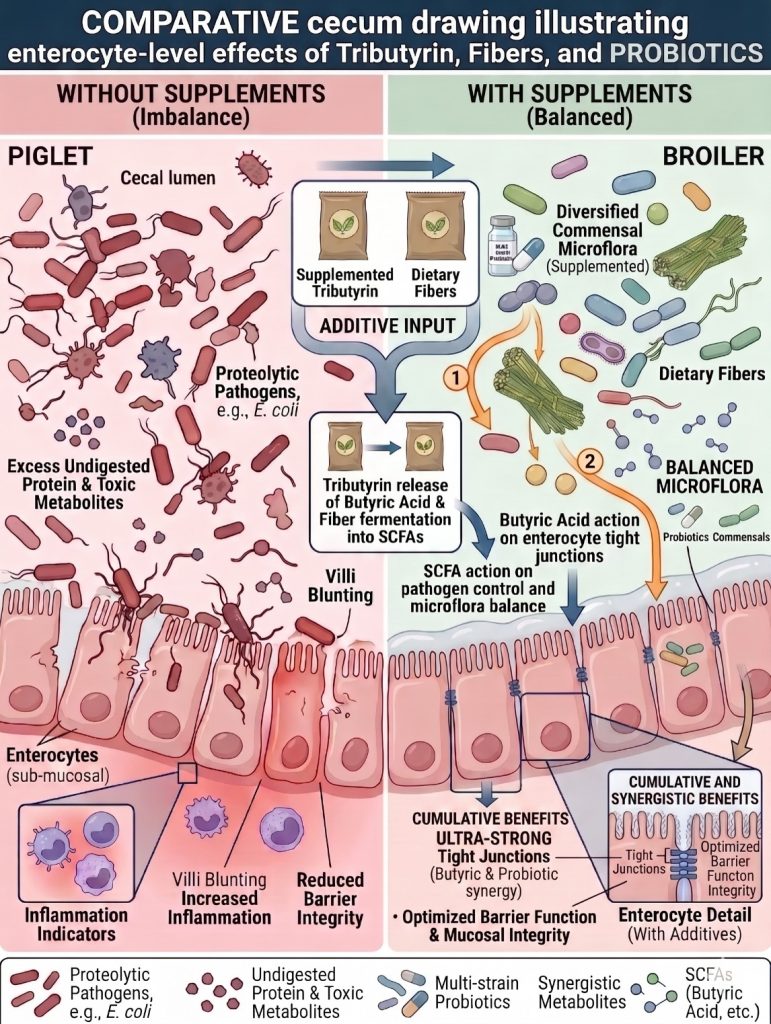
In many cases, post-weaning diarrhea is therefore not primarily a bacterial problem, but a digestive and formulation problem. The excessive flow of undigested protein toward the colon creates the conditions for pathogenic bacteria to dominate the microbiota.
Controlling nutritional diarrhea requires a shift in mindset. The future of piglet nutrition is not about maximizing crude protein or systematically killing bacteria. It is about maximizing digestibility, minimizing undigested protein, controlling stomach pH, and supporting a balanced microbiota capable of producing beneficial metabolites for gut health and performance.
David Serene
Nutrispices Director